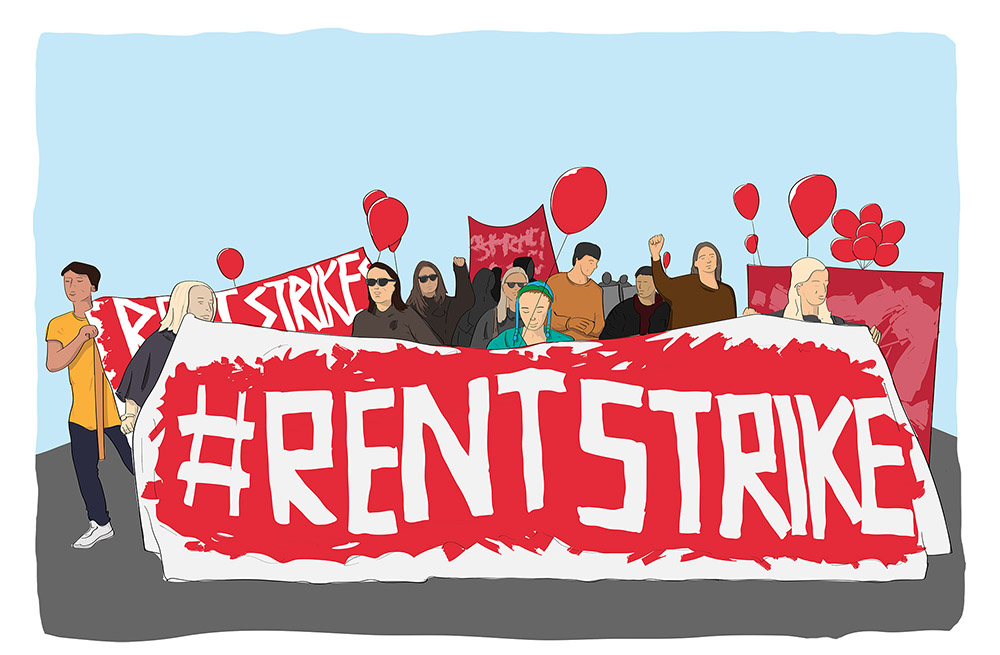

From stopping immigration raids on their streets to building renters unions, people are organising in their communities to take collective action against poverty, policing and the hostile environment. As well as fighting to improve the conditions of our lives now, these are struggles for a different future - for economic justice, decolonisation and abolition.
In this podcast we explore the theory and practice of community organising, and its role in bringing about political transformation. In each episode we bring people together to discuss a different question about how we fight to change the systems we live in.
This 2-part conversation focuses on love as a political force, with Balraj and Nuradin from Kids of Colour, an anti-racist youth organisation in Greater Manchester.
In this episode they introduce the Boys and Love project, where they run sessions with boys of colour exploring themes of love, solidarity, masculinity, feminism and community. We talk about the oppressive environment of schools and the policing of racialised young people, and how to disturb those hierarchies and build solidarity. We discuss how dialogue sustains and transforms our communities, and think about love as a humanising force against state violence and punishment.
Nuradin: [00:00:00] For me it's the care because people did care for me. You know, people did show me the love and its continuation really. Like stopping when a young person is accosted by a police. I usually have a thing where I wink at them. I'm like, hi, how are you? How are you? How's your mom? You know, I try to light up. So. It's those things because people did that for me. I remember those people.
[Music: Aum by K Monday]
Anna: Hello and welcome to the Community Organisers in Conversation podcast. I'm Anna.
Anya: And I'm Anya.
Anna: And we're from Seeds for Change. And today we're gonna be talking about love. Um, love as a political force, against state violence, against the division of our communities, and against the, the rise of the far right, um, which we're seeing all over the country.
Um, so we are here with Balraj and Nuradin from Kids of Colour, which is an abolitionist, anti-racist youth organisation. Um, and they're involved in a project called Boys and Love. So maybe we could just start off, uh, with that, maybe you could just tell us a bit about what is the Boys and Love Project, where did it come from and what are its aims?
Balraj: Yeah, so Boys and Love Project was something that the team were looking to kind of develop because they felt that there was a bit of a lack of solidarity shown towards, um, women and girls of colour, especially in schools. Um, and sometimes the boys were, weren't always kind of being supportive to them, you know, around issues that were like, yeah, racist and sexist.
So, um, yeah, it was kind of born of that really, from that, from the director of the organisation and the team there, and we've come in to deliver this project, as project coordinators. So we came in a few years ago, about two and a half years ago, and, uh, we've been delivering it in schools. We've also been going across the community and doing it some open sessions as well, for sort of older boys and young men.
And what we'd say, it kind goes through a lot of different themes and subjects, really. We look at kind of love, self-love, masculinity, a love of community, love of planet and climate. We also look at feminism and solidarity as well, internationally as well as locally. And whatever is kind of current at the time I think as well, you know, what are the issues of the day and of the week as well, I think kind of come in. So, um, yeah, I mean you wanna add anything more on that?
Nuradin: Yeah I think we also look at things like, uh, cultural fluid identity.
Balraj: Yeah.
Nuradin: And we recognise that a lot of the young people from the global majority, the experience of here, their parents, their grandparents, and then their experience, what they experience in the everyday environment, and talk about those things and, and talk about like language. We celebrate. We celebrate the cultural identities. But mainly the, the Boys and Love Project is about showing love to boys, black and brown and global majority boys. Talking to them in a loving, compassionate way while discussing serious and topical issues that are surrounding gender and discussing the manosphere and the influence of the manosphere and destructive force that is taking place.
So going in with compassion and love and understanding and actually learning as well. Learning from.... Me and Bal, we don't... We flick through some of the presentations or part of the workshop, and we use video, we use photos, graphic, digital stuff in the sessions. But we sit in a circle. We sit amongst them, so like we're part of them. Especially in schools, we like to disturb the school, so we have music on as they enter. And then, you know, we set up in a way where we can sit amongst and to have these conversations. So we don't come from a massive hierarchical kind of thing. And we don't police them too much in a session. We try to like show them love because there's so much policing of children, especially black and brown and global majority children in schools.
Anna: Hmm, thanks. And maybe it would be good to just explore like, the name Boys and Love. Like, what are you trying to kind of like, put across in that word love? What are you trying to challenge and what are you trying to like offer in that? And maybe that touches on like the aims of the work that you're doing.
Nuradin: I think the word love means that we're building on the, and we stand on the, on the shoulders of giants. Um, a lot of the black and brown people and global majority people coming to this country and facing all of the stuff that they faced and all of the different systemic and societal bigotry and racism and the continuation of that. So it's a form of resistance. Love is a form of resistance. Joy is a form of resistance. And mainly to say that we see [00:05:00] you. We see you despite what the media, despite what the schools are doing, despite how the society is looking at you. And we also bring in our own lived experience as well. Like how we grew up, uh, in this country, how we are viewed and continue to be viewed. So it's, yeah, from the base of it, it's solidarity. But we're building on the great works and a lot of the work and that love work is being done by black and brown women and global majority women, who've always recognised, like, the ways how white supremacy manifests itself on black and brown men and boys.
And also, there kind of like is also like a call to the boys, to stand in solidarity and know where they're at. Despite what people say about children, children are so intuitive and they're so aware and so intelligent and so bright. They know exactly why certain things are happening to them, the way they're viewed. You know, we just pose the questions and they're giving examples and they're talking about how they're policed, how, their relation to the police, you know, when they're outside of school with their friends, how they get stopped and searched and everything else that the way society looks at them.
So, having been a young boy and a young man, it is the way that, how like young people are feared. How can you, like, fear? You know, I think soon enough, I think it's already, but you've got 14 private prisons. You know what I mean? The school to prison pipeline is there, it is waiting, you know.
Balraj: Yeah, I think sometimes, you know, boys are seen as like adults like before their time as well, especially I think boys of colour. And there's a lot kind of put onto them I think sometimes too. And like Nuradin's saying, they're policed heavily, their sort of behaviour's watched, sometimes sexualized as well. And I think there's all these things that are kind of happening to them but not often, like, being loved. Um, and, you know, being seen as a threat, being seen as, you know, growing up to feel like you're gonna be seen as like a terrorist or whatever it might be, or a problem, or yeah, be excluded. So kind of something definitely I've witnessed a lot. But I think, yeah, having love and just showing compassion, I think as well, isn't... It feels simple, but I don't actually think it's always shown. You know, I don't think it's always given.
And I think even if it's just a small thing in a small part of the day or a small part of their experience, it feels important to lead with that. So like the work around community, we'll do... It'll be like love of community. And it'll be like looking at the history of the city, like people they might not have heard of, or you know, even with environment, it'll be like touching the earth, thinking about connection to environment and that love of earth that's kind of maybe been passed down generations, but then maybe has been kind of slowly forgotten about maybe, or kind of, um, gaslit sometimes as well, I guess really. You know, sometimes people, um, think of climate change or climate activism and don't really see themselves in it. But I think we're starting to see now, obviously really recent events like the hurricane in Jamaica and Haiti and Cuba and things, you know that, floods in Pakistan, places like that, that people's homelands are kind of under attack from those things.
So I think there's lots of different areas, you know, there's the interpersonal, but there's also the structural things. And I think, um, there's a really, a session we do on like love and self love and it's just trying to build that kind of vocabulary around it, I think, a little bit as well, and trying to hopefully normalize it. You know, and I think it, we've seen that as well. I think it's shifted a lot. Kind of, you know, a lot of boys are like... They do love their peers. They do love their friends, you know? And sometimes they do, sometimes they'll compliment it in different ways, won't they? Like they'll talk about someone's style or their hair or their kind of, the way that they, um, care for them and that kind of thing as well. So I think care is another element as well, actually. Within the love, isn't it? So the community, care, love.
Nuradin: We do an activity where we get them to almost mirror, and me and Bal model it out. And they then do it in pairs where they say, what do you love about this person? You know, and they talk about, you know, the stuff that they love. And some of the stuff they share is like moments that me and Bal kind of like, you know, it is so incredibly wholesome and so rewarding, like doing the work. It's really beautiful. They're like, yeah, yeah, my bredren, you know, they use the different type of language. So yeah, I really feel like honored and privileged to be doing this type of work that I'm doing. 'Cause yeah, I really like young people and, and I think everybody in our organisation, we have a love for young people and yeah, we remember.
Balraj: I think it also made me... it goes beyond just the sessions as well, I think sometimes. And [00:10:00] just, it makes me think about inwardly as well as outwardly around when I'm out and about trying to continue it, if you know what I mean? And so if you see young people, like humanizing young people and saying hello and giving them a smile or a nod. And I think often there can be that thing that they're seen as being threatening as well, aren't they? Or seeing like, oh, there's a group of young people. Are they intimidating? You know, like over there. But actually they're often just doing something really silly and like just being kids.
Nuradin: Playing.
Balraj: Playing and, you know, like, and it's the way that they're seen as, I guess, by society. So when things do happen and when harm does happen, it's like people don't have that reference point for them just being children really. And like, that they're making mistakes and I think if we do a bit more of that kind of building connections and relationships, I think with love, um, I think we might see a little bit of a change really, yeah. And even in your local community. So it's something I've been trying to do a little bit more, I think, based, um, and influenced by the sessions, I think, myself.
Nuradin: Yeah. For me it's just, uh, the care because people did care for me. You know, people did show me the love and its continuation really. Like stopping when a young person is accosted by a police or you know, saying who they are. And I usually have a thing where I wink at them. I'm like, hi, how are you? How are you? How's your mom? You know, I try to light up. 'Cause usually the police would always say, uh, you know, you're impeding our investigation. You are, you know, so. It's those things because people did that for me. Like, yeah. So for me it's a direct, especially growing up in south central Manchester, it's a direct... I remember those people. Like, who did that for me and who were there and showed the love and care. And the influence they have so that that stays with you. Yeah.
Anna: Mmm. Yeah and maybe that gets a bit to the heart of like, what you're thinking about in that idea of love is actually very different to maybe what like culturally we are taught love is. Which is like something that exists within, like, the nuclear family, or is like, romantic love. And like actually what you're talking about understanding and like nurturing is a community force of like, something that you can have for a stranger, something that you would hope to expect from a stranger.
And something which, I guess defies like, the way that the state and capitalism like tries to just like divide us all from each other and make us feel that like other people are none of our business. Like, I had that, similarly to like, you know, what you were saying about intervening in police harassment or whatever. Like, I was, there was an immigration raid in my city this week and I was trying to speak to the person at this business that was being raided, and the cops were like saying to me like, why are you getting involved? Like, why are you butting into our conversation with this person? And it's like this, the idea that that is such a kind of irregular and like strange thing to do. Um. I dunno, just like, this kind of idea of love as something more in our communities. That maybe is like, has been attacked historically and like we have to like, reclaim actually. Like, maybe it doesn't exist yet, but like we are making it exist by, by doing these things for each other.
Nuradin: Yeah, I'm just trying to, to think back and how long has it been where love has been part of my vocabulary really. It may be something in the last 20 years or so. And specifically there's something to, um, inner city black and brown global majority culture by understanding that the systemic structural oppression and the everyday battle against white supremacy, that there is this bit of solidarity. So we talk about the phenomenon of like, we call it the black and brown nod. Where people nod to each other. So it's all part of the solidarity. And saying hello to people on the street. Like it's all part of it. Um, it's a product of all the different people, waves of different people who are here. And using the word habibi as well, which is in Arabic is love, like is another word, like, or peace.
Balraj: Different greetings maybe.
Nuradin: Yeah. Different, yeah, so many different type of greetings, yeah.
Balraj: I think Benjamin Zephaniah's kind of on that. I think that reminds me of that, you know, that, um, sometimes learning those things, you know, I think sometimes in our sessions we'll ask people a bit about if there's something in their own language or their own culture.
Nuradin: Heritage.
Balraj: Yeah. Heritage and stuff. Like, and we also try and flip it a little bit, rather than talking about, you know, your descent, we'll say like your 'ascent'. You know, like what's your, um, where have you ascended from. So I think that's always quite fun. And we take quite a long time to sort of talk about that as well, don't we? Because we, um, think it's important. Because for so long, sort of names, are mispronounced or they're kind of...
Nuradin: Anglicized.
Balraj: Anglicized, shortened, sometimes without consent. And sometimes it's fine and people have given people permission and that kind of thing. But I think in [00:15:00] school it can be another site I think, of feeling, um, your identity or alienated by your race, gender, your background. So I think, yeah, just touching on what Nuradin was saying, I think really that acknowledging people and kind of what you're saying as well about standing up for someone you don't know or have never met, that is that love, isn't it? It's like humanizing people. And I think you create bonds there outside of the individual kind of life. And I think it's really powerful. And I think it's a reciprocal thing too, I think as well. I think I kind of hope that that sort of is the sort of thing that we wish for one another, right? You know? But it doesn't have to be, you know, it's not like transactional either. You know, we're happy to help even if that person doesn't have the capacity to help you, it's okay, isn't it? Um...
Nuradin: Yeah, solidarity is not transactional.
Balraj: Yeah. So I think, I think it's just showing that. And then I think with our groups, we hope that, yeah, you know, maybe in the future they might look back, it might not necessarily always be the thing that then and there they may fully comprehend, but maybe they might look back on it. Or, I definitely remember conversations or people coming in and showing love. And having, like in a youth kind of centre, someone coming in and just having a really like, kind of frank convo with a group of young, young men and boys and just, just still remember it. Still remember the conversations. 'Cause it was quite rare, you know what I mean? That someone was doing that. And, um, that was in like a, a Sikh community centre thing like in the summer or something, I remember. It was kind of interesting because a lot of those centres now have been closed or they're like underfunded.
And so I think it's important that we have the space to have nuanced conversations that sometimes there might be views that do challenge us and that maybe we don't fully agree with, but what's important is that we can hold those conversations. And I think sometimes that could be something that could be quite polarizing, maybe, in an online space. So I think actually just... And that's love as well I think. Being able to hold those different kind of conversations maybe, and be, um, be able to challenge, but also know that that's not that person... There's nothing like, evil or ill about that person. It's like they've got, we've got different viewpoints or something and maybe we can try and challenge that a little bit. But also maybe in time, hopefully they might discover other viewpoints as well. Or at least, at least be open to that conversation. And I think sometimes that's all we can kind of, you know, lead with.
And I think often, most of the time, I think actually all the time thinking about it, the idea that all humans just deserve, like, kind of to live and breathe and have dignity is something that everybody can agree on. Do you know what I mean? And I think that's kind of a nice foundation. I feel like that we, and children, I think get that most of all.
Nuradin: Yeah, we, that's what we use. And we ask why? Why do you think that? Like, we're curious. Other than condemning, you know what I mean? We don't go with that. Because we remember, we were young ones and we held, and as all human beings, whether young or old, like there's some views that are changed through different things. And this idea that if you're going to damn people, that's not gonna... That's not gonna help and that's never worked. Yeah.
Balraj: And I didn't come to where I'm at as well, say even with the work we're doing, until... it took, it was a journey for sure as well. You know, I kind of definitely had times where you're kind of thinking about things, even within my own, like adult life I guess, too. So I feel like I wanna hold that space and that time and that kind of patience, I guess, and not give up really.
Nuradin: No.
Balraj: On those conversations.
Nuradin: No, no. And for me personally, the journey was always there. Like, it's something that I've gone through as, um, I was born in East Africa. I came here as a kid. I survived civil war. So this idea of understanding why wars happen, that's what led me to this kind of, I would call as a humanist, like values, in my political education.
And then growing up in inner city Manchester in the nineties, like, you know, the amount of racism. And also like even now, what, where we are right now, you know, this resurgence of acceptance of like othering people constantly. And demonizing and dehumanizing people. So we learn so much. We learn so much. And I think that the boys and the young people that we work with, it's not a day or it's not a time where we're just not blown away by the conversations they're having. Like, I always try to compare, like last year we did a lot of third years in school. And I'm always like, yeah, I was just a football mad... Yes, I was feeling the stuff from police, you know, the constant policing, the constant kind of like stereotyping, you know, like all of that I was getting, and, and I'm grateful to the community and where I come from, um, how the people were resisting and showing us how to resist.
But I didn't [00:20:00] have lot of the critical skills some of them are displaying. You know, and especially when we talk about the manosphere and the influence on what's happening on, on, on the socials. Like some of them will talk about how they were challenging some of these views. You know, they're online and they're challenging these views about the dehumanization of people from their community or themselves, or women and girls or, you know, LGBTI+ or trans people. Like, it's, yeah, I'm just like, wow. Obviously we didn't have the internet like when I was growing up, but just, yeah, I'm just astonished like, for some of them, the clarity in which they see.
Balraj: Yeah.
Nuradin: And I think it's really sad that people really don't amplify that more and spend more time talking to young people.
Anya: You mentioned before, um, that like in schools you're sometimes trying to kind of disrupt the schools, or create it so it's different from the school environment. Um, but you also run the sessions outside of schools. Are you able to kind of explore a bit about the benefits and maybe limitations from the different contexts that you run them in?
Nuradin: A hundred percent. Yeah. Yeah, yeah. Really great question, yeah. When we get the, we do the open sessions and it's like 16 to 25, we get the space for two hours, and there we provide snacks, we bring drinks. We help out with travel. If some of them can't get there, we'll get them Ubers. And then we always have food. And with those two hours, we feel like there's enough time. To thrash out and to have a, you know, where everybody can say something about the stuff that we're discussing or the session that we're doing. While in school, we get an hour, and by the time we've got the check-in, we've got like 40 minutes or maybe 35 minutes to actually... But with the, in the open sessions, it's more relaxed.
Balraj: I think in the school, I think as Nuradin kind of mentioned, right from the go, you, you're just kind of feeling kind of like the oppression in a way really. 'Cause they're just, you know, you'll get in and it's sort of like tuck your shirt in, do your tie up, to the kids. They're like kind of, sort of telling them off, I guess, really just as soon as they're arriving, you know? And I think, if I'm thinking... I used to do a lot of work in schools and things too, so I'm thinking if someone's arriving and they're here, like that's a good thing surely for the school. So like, why don't we come with a bit of love, come with a bit of care, see how they're doing. Because you know, for some person they might have just been dropped off in the car, but someone else might have walked in, might have had to like, you know, help get their siblings up or you know, sort all sorts of stuff. You know, like people are coming in from different places. So I think if they've made it in, let's work with it, you know what I mean? Don't kind of like, um, make it harder for them, like if they're a bit late or whatever it might be. You know, just kind of catch them up, just get 'em up to speed and get going. You don't need to kind of like shame them, I think. So... I think there's that element to it, but I think also we've had quite a few times where our sessions might be treated as like an intervention, even though that's not really how we'd describe it. So that's been a bit of a battle, I think.
Nuradin: Yeah, schools are really oppressive. I try to look back at my, my own school. You could literally walk off the street and get into reception. And now the gated aspect of schools, the, you know what I mean? Like, so say that you had to fall out with a teacher, you're not feeling it, you used to be able to walk out. Like now, it's almost kind of like, almost as like they're preparing them for prison.
Anya: Yeah.
Nuradin: And maybe that's my own paranoia. But I feel like...
Balraj: They are actually sending them to another school sometimes for isolation, where they'll sit on their own for the whole week. And just have to do work like in another classroom with a load of kids that they don't know.
Anna: In a different school?
Balraj: In a different school. In like a partnered school in some cases. Yeah. And I think that's quite... there's a carceralness.
Nuradin: Yeah. The carceralness is, yeah. It's really bad. Because there's a certain aspect to what Bal was saying about how they see this as intervention, but I actually like, 'cause I'm always like, there are rebels. We get the group of young rebels who refuse to be dehumanized in a certain way or to be refusing to be overly policed. And like I said, like, people and adults don't give as much credit to young children. Like how, how perceptive they are, how they're on it. They know somebody's treating them like that or where they're coming from. So yeah.
Balraj: What I would say is that there are these sort of kind of certain teachers who do hold it down.
Nuradin: Hold it down.
Balraj: Yeah. You know, and show them love, you know what I mean? But I think they're often the teachers that are like getting us in to do the sessions. And that kind of understand, I think, what maybe we're trying to do with the program and with, as an organisation. And I think, um... They have conversations, they have relationships, they advocate for the boys and for the young [00:25:00] people. However, they are often constricted by the system that they're in. And I think because... And I think I saw someone, I think Jeffrey Boakye, this author, say about it recently when, um, I saw him at this event, I think maybe about early this year. But they were saying that they had to quit being a teacher, he said, because he felt like they were actually with the curriculum and the things that they were teaching, they were causing harm. Because it was part of that state sort of system and what they were teaching, you know? And as much as they tried to be there for the, for the kids and like, you know, I think all the black and brown kids would just like, be sort of drawn to him. Because he was a black teacher. Um. That's, it wasn't enough for him really. You know what I mean? I think he was just like, I had to kinda step away in the end because he felt like he was doing harm actually. So I thought that was kind of interesting. But I do still have respect though, to those people who try and champion and, and hold it down. And there are some people out there that are doing that work still.
Nuradin: But in the current climate, we don't know what's gonna happen with those. Because we see that all across the board, this type of like, clamping down of anti-racism.
Balraj: I think there was actually a case, um, feels relevant to mention this, of a school that we've worked in previously where a teacher was talking about the flags. And they were talking about how people could perceive it as being racist, and that they'd gone to a sort of an anti-fascist demo themselves. And I think someone videoed it and then parents complained and now that teacher has, has, there's been some disciplinary around that teacher.
Anna: Yeah I feel like I saw that in the news. Or maybe somebody shared it or, yeah.
Balraj: Yeah, yeah. So that's the kind of thing that, so that's literally just a teacher trying to have an open conversation.
Anna: About something, yeah.
Balraj: Yeah. About something that feels relevant. And you know, like, maybe that's their opinion and their view. And I'm sure they'd be up for a challenge on it, you know, if that's kind of what's going on.
Nuradin: But it's being shut down. Because of this kind of brainwashing, because of the political nature of like the current government. This kind of like, worshipping the flag. You know, we know about Prevent reporting four year olds, you know, five year olds, 10 year olds, to stigmatize them and to stereotype them and yeah... so, so the oppression is there. And it's clear.
And for me, yeah I would've been really interesting if I went to that talk with that teacher, Bal, who's left, because in my school it was some of those teachers, black and brown teachers, who literally like held it down. And I, I, yeah, I don't know where I would be without them really. Like I had literal racist teachers in my school who I had to go into their lessons, you know what I mean? And, and sit there and, and I would be angry, like, why? And I would always go to the other teachers, black and brown teachers, and say, why you not doing anything?
And I remember I did this Facebook post like a couple of years back where I talked about like my school life in the UK and, you know, coming in as a young child, like, the things that I went through. And one of my old teachers, Mr. Emmett, um, he, uh, posted. Like, he said something about he remembers me being young and like being angry at him. Why he wasn't knocking out the racist teachers [Laughter]. You know.
Balraj: He was in the comments?
Nuradin: Why, and yeah, he was in the comment of the Facebook post. And he was like, yeah, trying to get me to understand at that time, because I was just like, how can this be allowed? And the school politics and the dynamics in the school and how he and the others had to bite their lip basically. To try to help us. And like kind of like almost, you know, I succumbed to think, okay, me punching this other teacher or confronting them about the racism, how much of that do or can we actually help the young people? So, you know, realizing that. So yeah.
Bal also, I think you went to school like in the early, early...
Balraj: Yeah nineties and into early noughties as well.
Nuradin: Yeah. But, but I also feel as though that schools are becoming incredibly restrictive, incredibly controlling, and it attracts those type of teachers who are just incredibly abusive and kind of like dehumanized. So that is a factor as well. Like we remember certain time where teachers had the bit more freedom and yeah. But there is teachers who ruin kids, kids lives. Let's not mince our words. Specifically like the policing of black and brown children. And there are racist teachers. There are out and out like educators who are racist and will discriminate against young people and will, you know, try to humiliate.
I mean, you heard of the case of that child, that young girl who the teachers allowed the police to strip search. Like in my day, no way. No way for the type of teacher, Mr. Emmett, the other, some of the [00:30:00] other teachers who were from the community, who were from around there. No way would they ever allow a police person to strip search any of us. You know, if it came down to it, they'd be like, right, I'll come in with you. You know. So these things exist. And how teachers are scared, and, you know, headteachers and governors are, they're pushing certain things and local authority. And how this chain of like oppression is built.
And yeah, I do believe that like there are some young black and brown and also like, white kids, working class white kids as well, who are specifically like hounded on and targeted. And they know. They know and they pick it up from the, from the age of four. You know, there's all these types of research that's done, whether in Europe or in the US. There was one that teachers were set to say, who was the troublemaker? And these are like five, six year olds sitting around like a table where they're playing. And they always picked the black or brown kids. Like straight away.
Balraj: I mean, I've actually as well when I worked as teaching assistant when I just kind of come outta university, sort of did some work for an agency, like a teaching agency and um, ended up working with children had been excluded permanently from the school. Doing sort of like some one-to-one work and two-to-one work and there was children in year one who had been excluded permanently. So like that's kind of what we're working with sometimes. And I think, um, it was quite stark really. Just seeing that that's kind of happened for children. And usually there, you know, in some cases there would've been an underlying issue or like, um, an underlying, um, need, I guess. You know, around someone maybe, yeah, being neurodivergent or being autistic or having ADHD. You know, there not being the due diligence done maybe around some of that care and assessment. And support not being given.
Nuradin: And there's some crazy stat as well, isn't it? Like, of the young men who are in prison, there being lot of neurodivergent...
Balraj: Yeah, a lot of learning challenges.
Nuradin: Yeah. And there is all this kind of thing. That pipeline is there.
Balraj: But even in those cases, just going back as well, like I remember working with one of the children there. And it was me and another person who went in and we just kind of... I think the boy had been sort of, I think just failed so much that their default then was to like react, I think sometimes. But I think just ignoring that and just like creating a fun environment and having, doing games and things and like kind of creating a bit of a relationship, in time it kind of had an impact. And kind of we didn't see the behaviors supposedly we were meant to see all the time, you know?
And I think it was, yeah, just, it just shows that if you do take that care, if you do take that time, you can um... It'll be a very different scenario, I guess, that you're working with. Which, which we see all the time, to be honest as well. We hear things about young people, and then we're kind of, we're working with them and we're thinking, this doesn't really add up really, to be honest. You know what I mean? It's just like, they just, they seem cool. They seem chill. You know what I mean?
Nuradin: But, but if your approach is to constantly police, because I'm a believer, like constant policing is a form of dehumanizing and abuse. Like what, what do you expect?
Balraj: Sometimes as well, it'd be like people are not actually learning or teaching. They want compliance. You know, they want kind of compliance from people.
Nuradin: Obedience.
Balraj: Obedience, yeah. So that, that was something I saw a lot. Um, not everywhere. I saw some really, really amazing teaching as well. I think I was in schools for about six years or so. I was in primary school when Prevent came in. And I remember seeing some of the guidance and stuff around it. And being with teachers, actually, to be fair to their credit, white teachers who were like, this is racist. Like this, there's no way we're doing this. And we worked in like an 80% global majority kinda school. Um, a lot of Pakistani, South Asian children, um, in Manchester, south Manchester. And we, one of the examples, I'll always remember this, was that, oh, a child is wanting to speak like the language of their, like, heritage more. And they're wanting to connect more with that. And I'm like, how is, how does that mean that, you know, like counterterrorism, like this is what we're working with. You know?
Nuradin: Yeah.
Anya: Do you think the boys, like, feel the restrictions within schools, like even in your sessions? Like, is there a difference in what they feel able to kind of share or engage with?
Nuradin: Yeah. I remember the first time we ever went to school, our first ever session, somebody asked like, have you ever been arrested before? And I was like, yeah, I've been arrested. And they just wanted to, and I'm like, there is no way in this school that they could share any of those things. And have those type of conversations, you know.
Balraj: Yeah. I think from, from then on they, they were just hooked in because I think they weren't used to, I guess, that level of honesty I think from an adult, I guess, really. Yeah.
Nuradin: And I think it shows, like me and Bal are like, brothers. We're like, we, you know, we've known each other for a long, long time. So [00:35:00] the way we are with each other, that comes across and that shows.
Balraj: Yeah. We get it a lot when we're walking around the school. 'Cause often, you know, Nuradin will have keffiyeh on. And uh, I will usually too, to be fair. And we'll, we'll be walking through and we just kinda get people like wondering who we are or something, because we're not...
Nuradin: Yeah. Say hello...
Balraj: We're not in a suit or anything, and they're just wondering what's going on. They say, a lot of them'll be saying hello and we'll be chatting to people and talking to people and stuff. So I think that's always quite a nice feeling, really, I think.
Um, but for me too, just going back to what Nuradin was saying before is that, um, I was shown a lot of love though, I think from some kind of teachers and things and you know, like there's certain people that kind of identify, you know, and you remember. So it's kind of just trying to, again, remembering what it was about those people, you know, who were just, yeah, supportive or, you know, for me it was a teacher or a basketball coach, or that uncle or that certain person around who was like, they were just cool and they were non-judgmental and they were interested in what you were interested in. Um, and to find out more about it. And sometimes I'm like, okay, actually let's listen to what you are actually saying here and... we were both at a session recently, weren't we, where we were talking about young people. And I think sometimes people want young people to fit into some sort of box or something of what they already have in mind. But sometimes it's like, I think you have to kind of meet them in, in the space they are. And try and kind of understand that actually a little bit. Rather than try and get them to come to you like in this little place. I think that's quite interesting. And that's what I remember a little bit as well, is that yeah, someone would be like, oh yeah, well what kind of music you into? Or what is that? Or let's put those tunes on, like, I've not heard of that artist. Let's listen to some of their tracks. Okay, cool. Interesting. Or I'll go away and like, listen, listen and read up on it a bit and come back and we'll have a conversation about it or something. So it's like showing that same kind of intrigue that they might have in what we're doing, but also in what they're interested in as well.
And the thing is, you know, people are going through different things, you know, week to week. Sometimes, you know, we're doing sessions when people have been like, maybe fasting. Or when there's been kind of exams are going on or there's kind of like different changes. But, sometimes, sometimes we just don't have time to get into the full session because something's gone on in school. And maybe let's chat about that a little bit and... or maybe let's just do some games because it's been heavy. Maybe let's just kick this ball around and do some games for a lot of the session. And that's okay. I think we've got the permission. Because we're not focusing on like outcomes. So I think often when I've worked with sort of organisations and stuff in the past, or even when I used to work in schools and things, it's so outcome focused, outcome focused. And I think in, in a way that creates that tension and creates the pushback. Because actually that's not really how we always work. Sometimes you have to shift what you're doing based on the energy, you know, of the people you working with, of the group and, and kind of responding to that. And I think, yeah, we have permission to just be like, look, if they're just humanized for that one hour, one hour 30, one hour 20, whatever time we have. And we've just had a chance to chat or like, throw this ball around and have a check in. That's cool. Like we're okay with that.
Nuradin: Yeah. So sometimes doing this work feels like we are, you know, battling against this massive tide. But it's an important work and I'm grateful to be working for organisation that believes in and has these values, that wants to care and show love and be loving in a place like that.
Anna: Hello, we're gonna be back in part two where we talk more about the crisis of growing fascism, the importance of spaces for conversation, care, and grief, and the need for deep work in all our communities to counter fascist ideology at the root. We reflect on the years of work that has built community relationships against state violence in Manchester, and how this commitment to love can inform struggles for all our liberation. See you for part two.